We use cookies to personalise and enhance your experience on this site. By clicking Accept or continuing to use the site, you agree to our use of marketing and social media cookies as described in our Privacy Policy.
Accept and close
We hope that 2026 has begun well for you. It has been straight out of the blocks for us at IFOW, with the announcement last week by Liz Kendall, Secretary of State for Science, Innovation and Technology, of a new cross-government AI and the Future of Work Unit.
IFOW Founding Co-Director, Anna Thomas MBE, said:
‘This announcement is strongly supported by IFOW’s Pissarides Review into Work and Wellbeing, funded by the Nuffield Foundation. The Review recommended the creation of such a Unit in response to findings about the complexity and pace of technological transformation, which vary hugely and can be hidden.
‘Establishing a dedicated unit recognises and signifies the future of work and automation as critical policy areas that are inherently cross-cutting and involve collaboration across government, industry and civil society.'
'We look forward to continued work with DSIT to support the Unit's activities and development, and we are particularly delighted that Dr Abby Gilbert will be sitting on the Expert Panel overseeing the work of the Unit.'
We've also been busy preparing to publish a number of reports, and we're looking forward to a webinar this Friday that we discuss in the Deep Dive below.
It’s with great pleasure that we can now confirm Liz Kendall will be delivering a keynote address at our Making the Future Work conference on Monday 18th May.
Convening senior stakeholders across industry, research, technology, investment and policy, we’ll be focusing on one of the most urgent questions of our time: how can we couple the immense power of AI with human capability to create a future that works for all?
Registration is now open, and we really hope you’ll be able to join us.
Anna and Team IFOW
Although the Pissarides Review published its Final Report last January, research work on the wealth of material it aggregated has continued, and at midday this Friday we will be marking the publication of three new papers with a launch webinar.
These three reports paint a picture of how workers are experiencing change, what shapes their ability to adapt, and how institutions and organisations can and must function to shift technological transformation towards shared benefits, rather than further entrenching inequalities.
Taken together, they affirm an important message, one that counters the idea of technological determinism: institutions are key drivers of how technology reshapes work.
This work shows that managing transitions, improving job quality, supporting upskilling and sharing the gains from AI all depend on the strength of organisational structures such as employee-centred HR policies, training provision, and representation.
In short: the future of work is not predetermined by technologies - it is made by our institutions. Do join us on Friday for what promises to be an excellent discussion of this important new work.
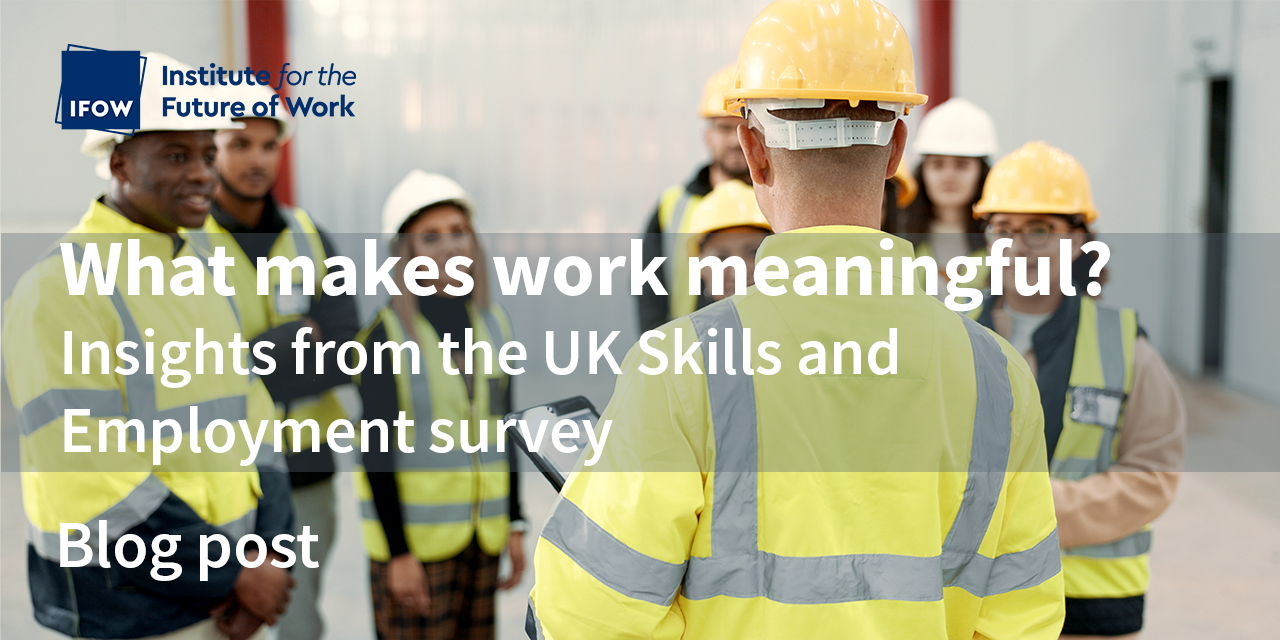
How can we ensure technology enhances the meaningfulness of work? In this blog, IFOW Research Fellow Ying Zhou unpacks how social relationships, intrinsic job quality, and a sense of belonging contribute to a feeling of meaningful work, and how this is experienced across the UK.
To find out more about the correlation between exposure to different types of technology, from established to emerging, and the impacts on worker wellbeing, read our report here.
What contributes to different countries adopting new technologies at different rates? This piece, co-authored by Daron Acemoglu, who spoke at our Pissarides Conference, and wrote a blog piece for us on machine usefulness, tracks technology adoption in the context of economic development, considering varied absorptive capacities, institutional distortions, and mismatches between frontier technologies and the needs of different countries.
Against a backdrop of major shifts in the world of work, this comprehensive overview brings together 49 authors to collate existing theory, new methodologies and emerging areas of research on work design - and the individual, workgroup, organisational, national, and global factors that shape it.

As Amazon maps out plans to automate enormous numbers of warehouses and operations, this article explores how narratives of partnership, ‘cobots’ and collaboration are being used to reframe realities of replacement.
Our report Reframing Automation examines the impacts of different choices made around the design, development, and deployment of various forms of automation, particularly how these vary across specific demographic groups and geographic communities.
Gender gaps in generative AI adoption are driven less by skills or access than by systematic differences in how women and men perceive AI’s societal risks, according to this new study, which also unpacks the potential implications for productivity, skill formation, and economic inequality in an AI-enabled economy.
Could possessing AI skills offset conventional disadvantages in hiring processes, such as age or education disparities? This survey finds that AI skills can function as a powerful hiring signal, mitigating traditional labour market disadvantages and altering workers' skill landscapes, as well as firms' recruitment practices.
This policy report from the ACCA explores the changing future career paths of accountancy professionals, and the drivers making them less linear and more flexible. Read IFOW Co-Director Dr Abby’s accompanying interview here.
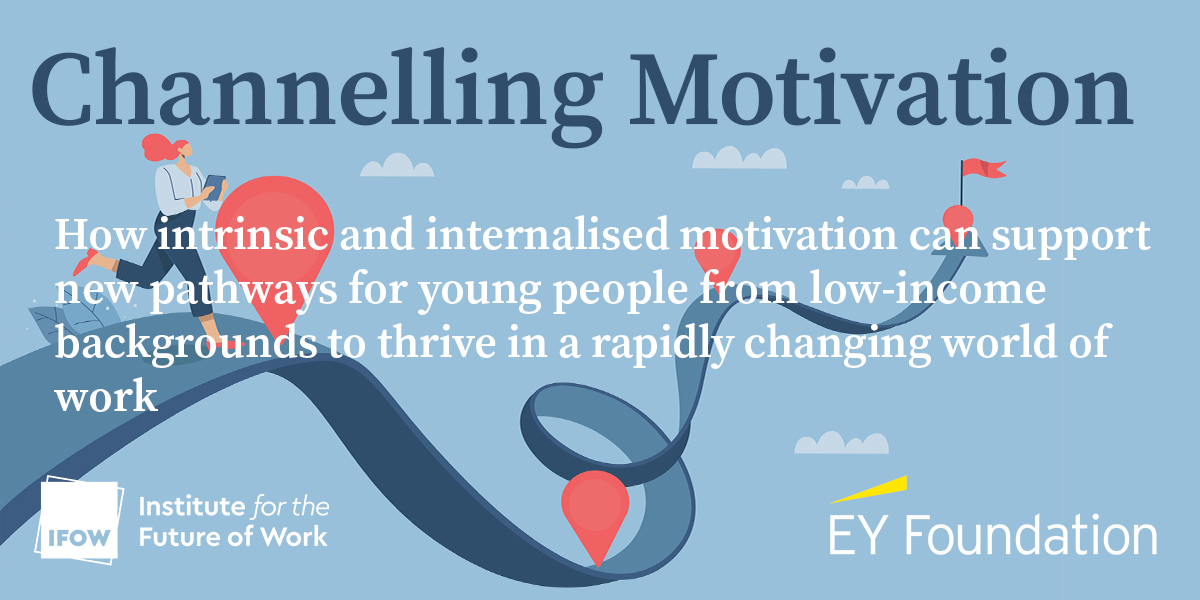
How can a renewed focus on motivation support young people from low-income backgrounds to thrive in a rapidly changing world of work?
Join us for the launch webinar of Channelling Motivation, a research project focused on how young people can be supported to develop and sustain forms of motivation that will help them to access good work through technological transformation, with a contribution from IFOW Chair of Trustees Dr Anne-Marie Imafidon MBE.
How can AI be used to create reliable public services? In this webinar by the Open Data Institute, an expert panel will discuss how generative AI can support trustworthy, effective interactions between citizens and government.
Join the Work Foundation to review the latest figures on young people not in education, employment or training, and discuss what it means, particularly in the context of the ongoing Milburn Review.
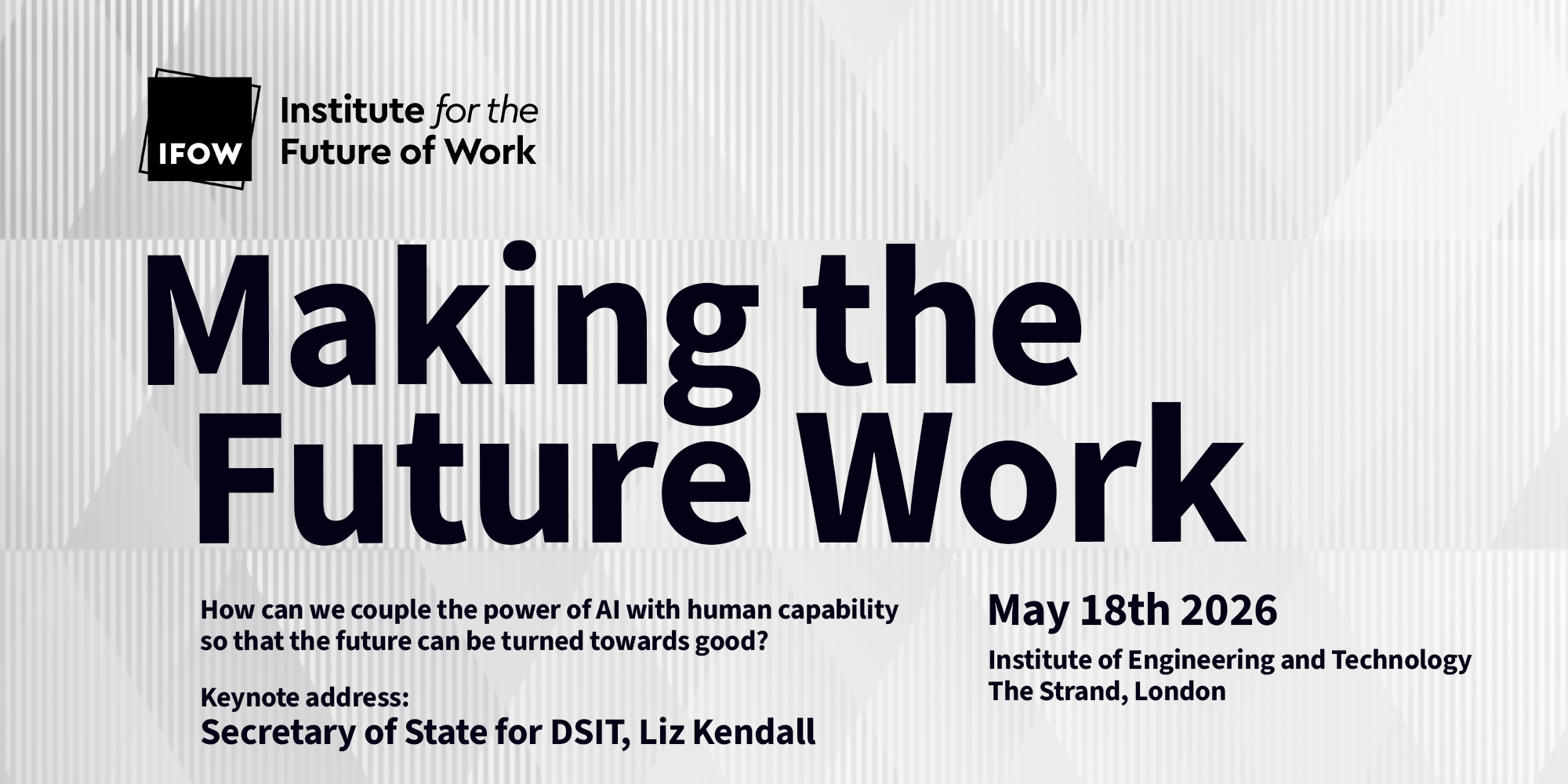
We have now opened registration for our major Making the Future Work conference, which will take place at the IET in London on 18th May.
Please do sign-up here. If you are interested in partnering with us for this event, please contact team@ifow.org.