We use cookies to personalise and enhance your experience on this site. By clicking Accept or continuing to use the site, you agree to our use of marketing and social media cookies as described in our Privacy Policy.
Accept and close
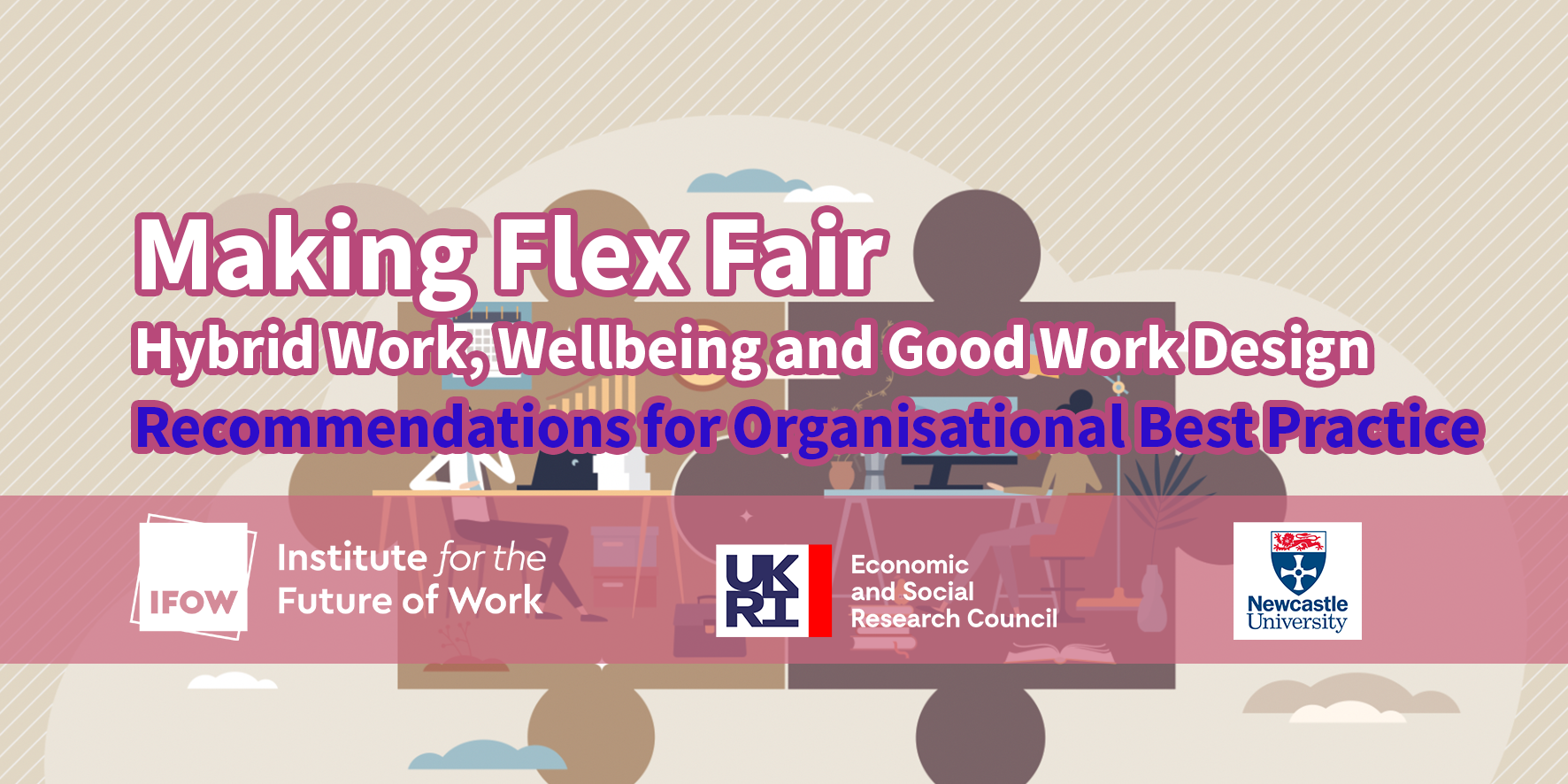
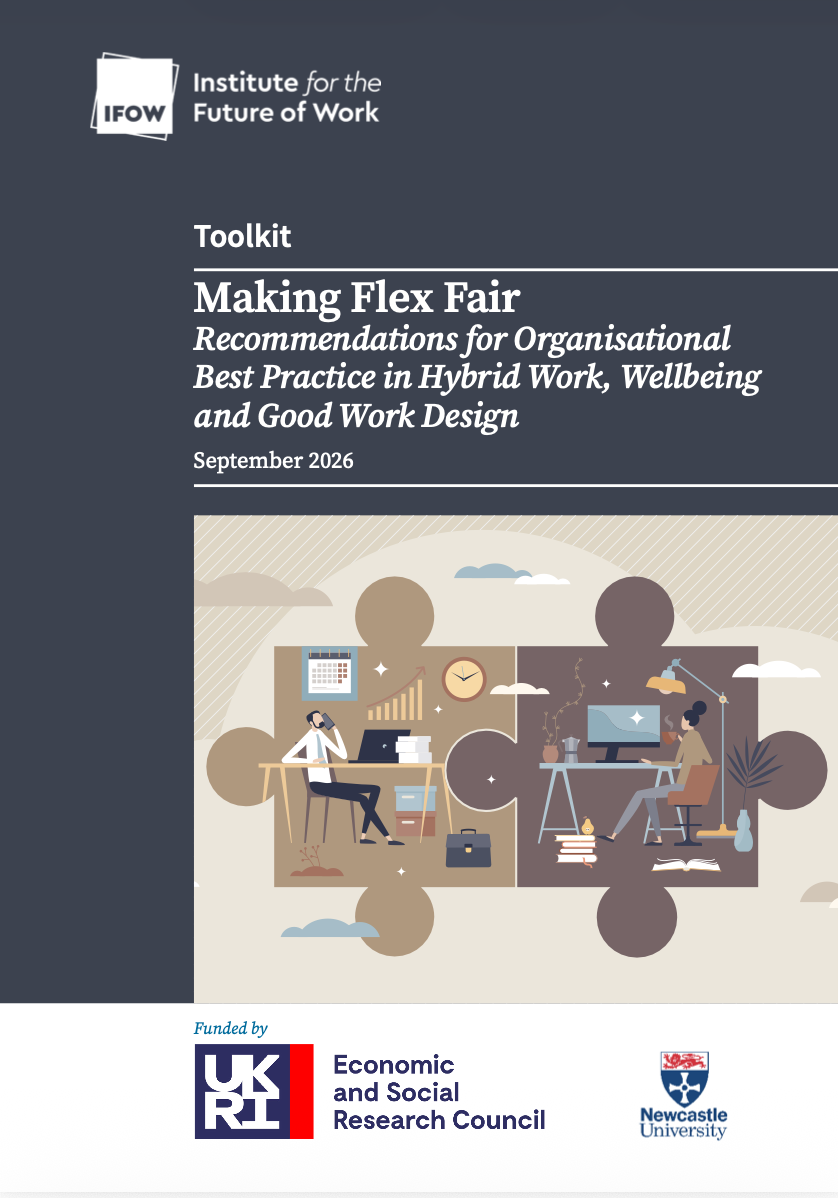
Hybrid work can offer greater autonomy and improve access to good work… but these benefits aren’t distributed equally, and hybrid working can also mean longer hours and more intense days. So how can we Make Flex Fair? This Policy Brief sets out the key recommendations for policymakers, especially in the context of delivering on the priorities for the Keep Britain Working review.
Explore the other publications in the series: Full Report | Policy Brief
Join our launch webinar at midday on Tuesday 29th Sept.
This suite of reports draws on research conducted for the Working@Home project led by Professor Abigail Marks, and funded by the ESRC and Newcastle University. Across surveys and interviews with UK workers, their research surfaces how hybrid working can lead to:
This leads to increases in ‘work-life conflict’, with significant impacts on wellbeing. Importantly, these impacts are not felt equally, and vary according to gender, seniority, caring responsibility and socio-economic resource.
They also depend on how the ‘moral architecture’ of workplaces – what counts as ‘good’ work – is carried over uncritically into hybrid arrangements, leading to pressures to emphasise fast response times and being ‘always on’, rather than quality outputs.
“Making flex fair makes an important contribution to the debate around hybrid work, providing much-needed research rigour where evidence has previously been lacking. But it does more than that, showing how successful introduction of hybrid working is about placing it in the context of organisational design and HR practices.” Jonathan Morris, Emeritus Professor specialising in organisational management, Cardiff University
As Sir Charlie Mayfield’s Keep Britain Working review emphasises, this really matters as poor health and wellbeing are significant drivers of economic inactivity in the UK.
But findings point to policy changes and organisational best practice that can really Make Flex Fair, including:
Overarching all of this is a call to see well-designed hybrid work as part of the UK’s preventative workplace health infrastructure. Hybrid work can help deliver on the Keep Britain Working goals of preventing health-related labour market exit and supporting retention and inclusion.
“This report makes a significant contribution to contemporary debates about the changing nature of hybrid work. Drawing on a compelling evidence base, it demonstrates how the benefits of hybrid work are shaped by work design, managerial practice and workers’ diverse circumstances. The research offers a progressive agenda for creating forms of flexibility that are both sustainable and genuinely inclusive.” Professor Kirsty Newsome, Chair in Employment Relations, Centre for Decent Work, Sheffield University
Join the launch webinar:
Kester Brewin
Tool
Changing work